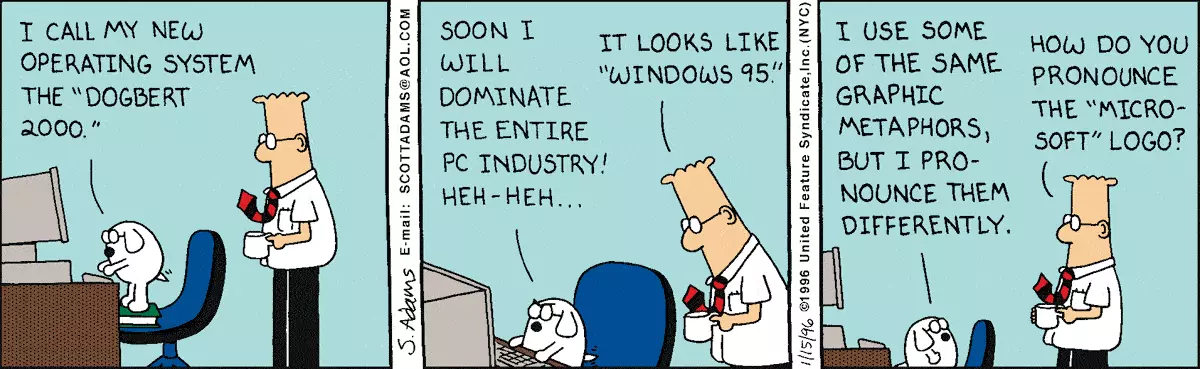
Dilbert cartoon first published on Monday 15th January 1996
Dilbert//2466, first published thirty years ago on Monday 15th January 1996
Tags
entire pc industry graphic metaphors microsoft logo pronounce differently dogbert 2000
Official transcript
Dilbert stands on a book on a chair and works at a computer. He tells Dilbert, "I call my new operating system the 'Dogbert 2000.'"
Dogbert continues, "Soon I will dominate the entire PC industry! Heh-heh . . ."
Dilbert looks at the monitor and says, "It looks like 'Windows 95.'"
Dogbert replies, "I use some of the same graphic metaphors, but I pronounce them differently."
Dilbert asks, "How do you pronounce the 'Microsoft' logo?"
originally published on dilbert.com
Open source transcript
I CALL MY NEW OPERATING SYSTEM THE "DOGBERT 2000." SOON I WILL DOMINATE THE ENTIRE PC INDUSTRY!
- ...
IT LOOKS LIKE "WINDOWS 95." I USE SOME OF THE SAME GRAPHIC METAPHORS, BUT I PRONOUNCE THEM DIFFERENTLY.
HOW DO YOU PRONOUNCE THE "MICRO- SOFT" LOGO?
collated from github.com/jvarn/dilbert-archive
AI Analysis
Comic Strip Title: "The 'Microsoft' Logo"
Summary:
This 'Dilbert' comic strip revolves around the character Dilbert, who is depicted as a white dog with a distinctive appearance. The strip is divided into three panels, each featuring Dilbert engaging in a conversation with his boss.
Panel 1:
- Dilbert introduces his new operating system, "DOGbert 2000," to his boss.
- The boss responds with a mix of confusion and amusement, commenting on the system's name and its potential to dominate the entire PC industry.
Panel 2:
- Dilbert proudly declares that his new operating system will look like "Windows 95."
- The boss inquires about the use of graphic metaphors and asks Dilbert to pronounce them differently.
Panel 3:
- Dilbert responds by pronouncing the "Microsoft" logo, showcasing his creative approach to language.
Overall:
The comic strip humorously explores the theme of innovation and creativity in technology, as well as the importance of effective communication. Through Dilbert's antics, the strip pokes fun at the complexities of computer jargon and the challenges of understanding new technologies.
generated by llama-3.2-11b-vision-instruct
Accompanying textual content, such as title, tags and transcripts, is shown here if we have it. Not every comic has all of these, and they seem to be a bit hit and miss even on the official website.