Dilbert cartoon first published on Thursday 31st January 2013
Dilbert//8692, first published thirteen years ago on Thursday 31st January 2013
Tags
fear inventions machine learning track customers machines take over annihilate all humans
Official transcript
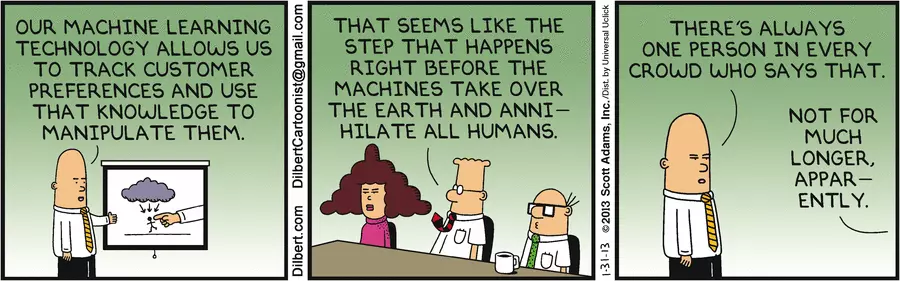
CEO: Our machine learning technology allows us to track customer preferences and use that knowledge to manipulate them. Dilbert: That seems like the step that happens right before the machines take over the earth and annihilate all humans. CEO: There's always one person in every crowd who says that. Dilbert: Not for much longer, apparently.
originally published on dilbert.com
Open source transcript
OUR MACHINE LEARNING TECHNOLOGY ALLOWS US TO TRACK CUSTOMER PREFERENCES AND USE THAT KNOWLEDGE TO MANIPULATE THEM.
THAT SEEMS LIKE THE STEP THAT HAPPENS RIGHT BEFORE THE MACHINES TAKE OVER THE EARTH AND ANNIHILATE ALL HUMANS.
THERE'S ALWAYS ONE PERSON IN EVERY CROWD WHO SAYS THAT.
NOT FOR MUCH LONGER, APPARENTLY.
collated from github.com/jvarn/dilbert-archive
AI Analysis
Title: "The Machine Learning Dilemma"
This Dilbert comic strip, originally published in 2013, explores the potential consequences of relying on machine learning technology to track customer preferences and manipulate them. The strip features a conversation between Dilbert and his boss, who is concerned about the ethics of using this technology.
Key Points:
- The boss explains that the machine learning technology allows them to track customer preferences and use that knowledge to manipulate them.
- However, he notes that there's always one person in every crowd who says that seems like the step that happens right before the machines take over the earth and annihilate all humans.
- Dilbert responds by saying that not for much longer, apparently.
Themes:
- The strip touches on the theme of technological advancement and its potential impact on society.
- It highlights the importance of considering the ethical implications of using technology to manipulate people's behavior.
- The strip also pokes fun at the idea that some people might be overly paranoid about the dangers of technology.
Tone:
- The tone of the strip is humorous and lighthearted, with a touch of satire.
- The use of a cartoon character like Dilbert adds to the comedic effect.
Conclusion:
Overall, this Dilbert comic strip raises important questions about the responsible use of technology and the need for ethical consideration in its development and deployment. While it may not be a serious commentary on the topic, it provides a humorous take on the potential risks and consequences of relying too heavily on machine learning technology.
generated by llama-3.2-11b-vision-instruct
Accompanying textual content, such as title, tags and transcripts, is shown here if we have it. Not every comic has all of these, and they seem to be a bit hit and miss even on the official website.


