Dilbert cartoon first published on Sunday 9th May 2004
Dilbert//5503, first published 22 years ago on Sunday 9th May 2004
Tags
attend meeting mandatory meeting meeting mandatory approval bending rules handed out cash
Official transcript
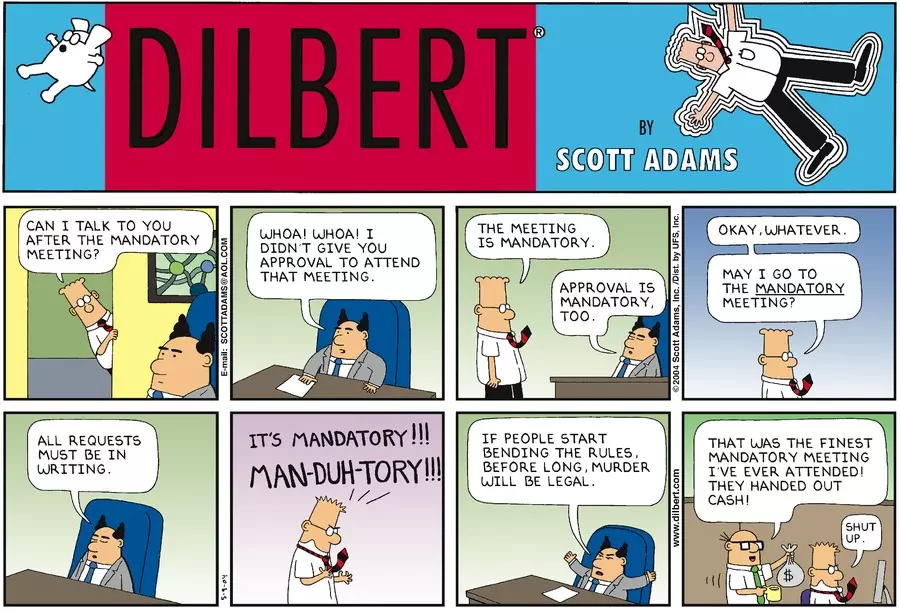
"Can I talk to you after the mandatory meeting?"
originally published on dilbert.com
Open source transcript
CAN I TALK TO YOU AFTER THE MANDATORY MEETING?
WHOA! WHOA! I DIDN'T GIVE YOU APPROVAL TO ATTEND THAT MEETING.
THE MEETING IS MANDATORY.
APPROVAL IS MANNATADY OKAY, WHATEVER.
MAY I GO TO THE MANDATORY
ALL REQUESTS MUST BE IN WRITING.
IT'S MANDATORY!!!
MAN-DUH-TORY!!!!
TOO.
IF PEOPLE START BENDING THE RULES.
BEFORE LONG, MURDER WILL BE LEGAL.
THAT WAS THE FINEST MANDATORY MEETING I'VE EVER ATTENDED!
THEY HANDED OUT CASH!| SHUT UP .
collated from github.com/jvarn/dilbert-archive
AI Analysis
Title: "The Mandatory Meeting"
Summary:
This comic strip, originally published in 2004, is a humorous take on the frustrations of attending unnecessary meetings. The strip follows the character of Dilbert, a bespectacled man with a distinctive hairstyle, as he navigates a series of absurd and bureaucratic conversations with his boss.
Key Panels:
- The first panel shows Dilbert asking to talk to his boss after a meeting, only to be told that he needs approval to attend the meeting in the first place.
- The second panel depicts Dilbert's boss responding to his request with a series of increasingly ridiculous conditions, including the need for all requests to be in writing and the requirement that people start bending the rules before long.
- The third panel shows Dilbert's boss declaring that murder will be legal if people start bending the rules before long, prompting Dilbert to hand over cash to the reineist mandatory meeting attendees.
- The final panel reveals that the reineist mandatory meeting was actually a scam, with the attendees being paid off to attend.
Themes:
- The comic strip pokes fun at the bureaucratic red tape and absurdity of modern office life.
- It highlights the frustration and annoyance that can come with attending unnecessary meetings and dealing with overly bureaucratic procedures.
- The strip also touches on the theme of corruption and the ways in which people can take advantage of systems for personal gain.
Tone:
- The comic strip is written in a sarcastic and humorous tone, with Dilbert's boss being portrayed as a bumbling and incompetent authority figure.
- The strip uses irony and exaggeration to highlight the absurdity of the situation, making it a relatable and entertaining read for anyone who has ever felt frustrated with the monotony of office life.
generated by llama-3.2-11b-vision-instruct
Accompanying textual content, such as title, tags and transcripts, is shown here if we have it. Not every comic has all of these, and they seem to be a bit hit and miss even on the official website.


